How many miles are left in a used running shoe? How to read the photos
You can't test-drive a pair online, but the photos tell you almost everything. Here's how I read wear on every pair before it goes on the rack.
Start with the rule of thumb
The guideline most running brands give is that a pair lasts roughly 300 to 500 miles, depending on the runner, the surface and the shoe. That's a range, not a timer. Plenty of shoes are retired at 50 miles because the owner didn't like them, and a light runner on a treadmill gets more out of a pair than a heavy runner on concrete.
So the question isn't "how old is this pair?" It's "how much of that range has been used up?" Four photos answer that.
1. The outsole: the odometer
Flip the shoe over. The outsole is the rubber that touches the road, and it wears in predictable places.
- Tread clearly visible everywhere: light use. Likely well under 100 miles.
- Smooth patches at the outer heel or under the big toe, tread still around them: moderate use. Lots of life left for walking and easy runs.
- Rubber worn through to the foam underneath: done for running. Fine for the garden.
Most of what we stock sits in the first two groups. Pairs worn through to the foam don't make the rack.
2. The midsole: the cushioning
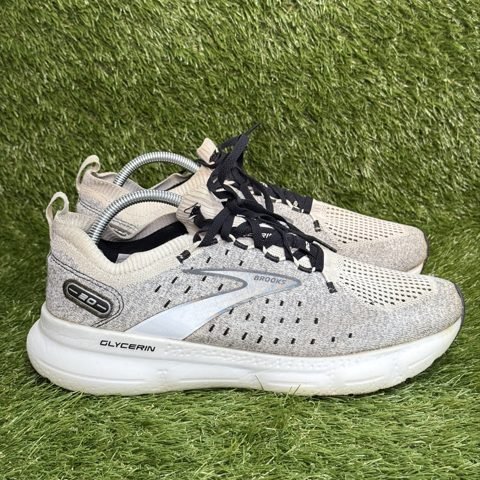
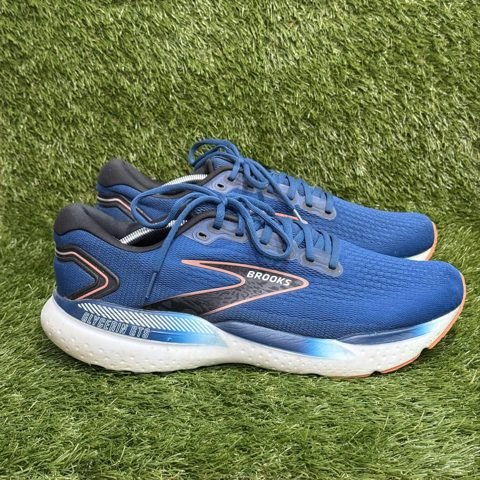
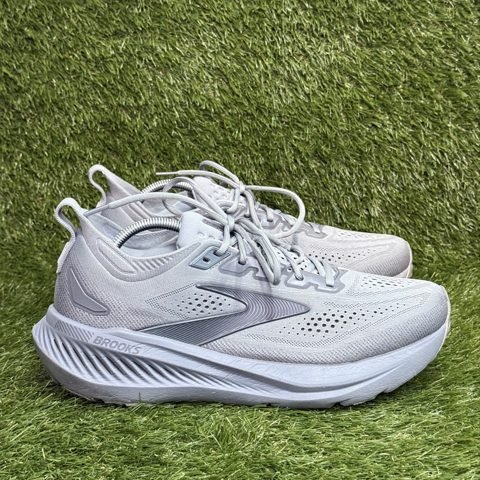
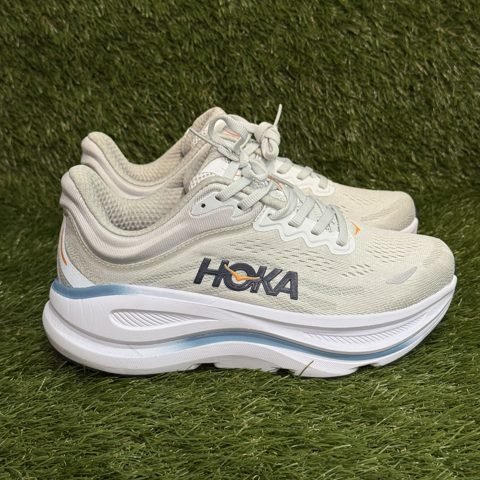
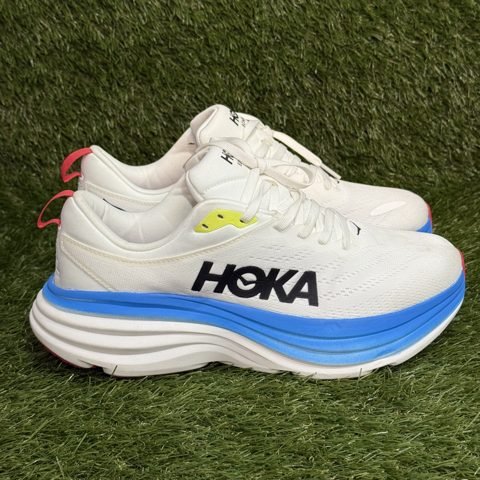
The midsole is the thick foam layer, and it's what you're actually paying for in a shoe like a Hoka Bondi or a Brooks Glycerin. From the side photo, look for:
- Fine creases: normal, appear in the first few runs.
- Deep horizontal wrinkles, foam that looks squashed: the cushioning has compressed.
- The heel leaning in or out when the shoe sits on a flat surface: the foam has broken down unevenly. Skip it.
3. The heel counter and lining
Look inside the back of the shoe. The lining should be intact and the heel cup should hold its shape. A torn lining means rubbing; a collapsed heel means the shoe has lost its structure.
4. The upper
Mesh tears over the little toe and split seams near the flex point are the common failures. Small scuffs and dirt are cosmetic and usually wash out.
Putting it together
Here's the quick version I use:
- Tread visible + creases light + heel intact = runs like new, buy it for training.
- Some smooth spots + moderate creases = great daily walker or easy-run shoe.
- Anything worn through or leaning = pass.
Why this beats buying new for a lot of people
If you walk all day at work, you'll get months out of a pair that a marathoner retired. And if you're testing whether a model works for your feet before paying full price, a pre-owned pair is the cheapest way to find out. The Brooks Ghost pairs on our rack right now are in the $35 to $56 range; a new pair costs far more.
 New
 New
 New
 New
 New
 New
 New
 New
Ask for what you can't see
If a listing doesn't show the outsole or the inside of the heel, ask the seller for it. Every pair on our rack has those photos already, plus the size tag, so you can judge the wear yourself. Not sure what you need? Start with the pairs in your size.